Keeping calves warm
Calves are much more sensitive to cold temperatures than adult cattle. As the calf ages and increases its energy intake, it generates more heat to keep itself warm. Older calves also develop thicker skin and more subcutaneous fat, which act as insulation. Despite this, all calves still need special attention in colder temperatures.
All animals have a thermoneutral zone, which is a temperature range where the animal is not too hot or too cold, and does not need to use energy to keep itself comfortable (such as panting when hot or shivering when cold). Calves under three weeks of age are comfortable at environmental temperatures between 15 and 25°C. When the temperature is above or below this range, calves will start to adjust their behaviour to keep warm or cool off. When temperatures fall below 15°C, energy will be used by the calves to keep warm, leading to cold stress. This means if producers do not offer calves more feed (energy), the feed calves are given will be used to keep warm instead of for growing or protecting against disease. Calves not given enough feed in cold weather will not grow and may even go backward and lose weight.
Newborn calves are particularly susceptible to cold stress for the following reasons:
- Wet hair cannot insulate the calf. Newborn calves or calves that are wet for any reason need to be dried off. As water on a calf evaporates, it takes heat with it. This process of evaporative cooling is important for older animals during periods of heat stress, but takes a lot of energy from young calves in the winter.
- Make sure calves are dry before putting calf jackets on.
- Newborn calves have only 1.5 per cent brown adipose tissue (BAT), a type of fat present at birth for the purpose of generating heat during cold stress. Without colostrum, BAT stores are depleted in 18 hours.
- Colostrum IgG absorption is reduced with cold stress.
- Newborn calves have only three per cent body fat, leaving them heavily dependent on nutritional energy sources for heat production.
Ensuring calves are dried off immediately after birth and are fed plenty of high quality colostrum, followed by ample amounts milk or milk replacer will help calves born in the winter thrive.
Calves older than three weeks of age begin to experience cold stress at 5°C. For all unweaned calves, increasing the amount of milk or milk replacer fed will ensure the calf has enough energy to keep warm, grow, and stay healthy.
Consider the following when adjusting milk feeding in the winter:
- Milk or milk replacer is the most efficient and palatable source of feed for calves.
- In general for every 6°C below freezing (0°C), the calf should be offered 10 per cent more milk.
- For example, a calf less than 50 kg (about 21 days old) requires 1.8 L more milk replacer per day at 0°C than at 20°C (of a 20/20 MR mixed at 125 g/L). A heavier calf requires even more.
- Increase the volume of milk fed, with a third daily feeding when possible. Offering calves a warm “lunch” is worth the extra effort.
- Keep the concentration of the milk replacer consistent.
- Increasing the amount of powder fed in the same amount of water is an option, but may present some health challenges, such as ulcers or scours. Scours can become a problem if milk contains more than 18 per cent solids.
- Extra fat in milk may decrease the amount of starter eaten by the calf, which may cause them to lose out on extra calories.
- Consult with your herd nutritionist before changing milk replacer concentration.
- Gradually increasing the volume of milk fed can reduce the chance of scouring.
- In the spring, make any reduction in milk allowance gradual as well.
- Feed milk at a warm temperature (around 38.5°C) – otherwise the calf needs to use energy to warm the milk to body temperature.
- Measure milk replacer by weight (using a scale), not by volume (using a measuring cup). Weighing milk replacer ensures a more consistent and accurate amount is used at each feeding. Depending on the density of the milk replacer or whether you pack it down into a measuring cup, you can get a wide range of weights of milk replacer fitting into the same measuring cup.
- Calves thrive on consistency. All feed changes should be made gradually and in consultation with your herd nutritionist.
- Communicate changes in the feeding routine to all calf staff.
- Don’t feed a little extra only on really cold days – frequent or sudden changes to milk amounts or timing can cause digestive upset and stress. Maintain your cold weather feeding routine until the spring brings consistently warmer weather.
Keep an eye out for shivering or raised hair amongst your calves – these are signs that they are suffering from cold stress. Ensure your calves are using as much of their milk for growth as possible by making sure the rest of your management is working to keep your calves warm:
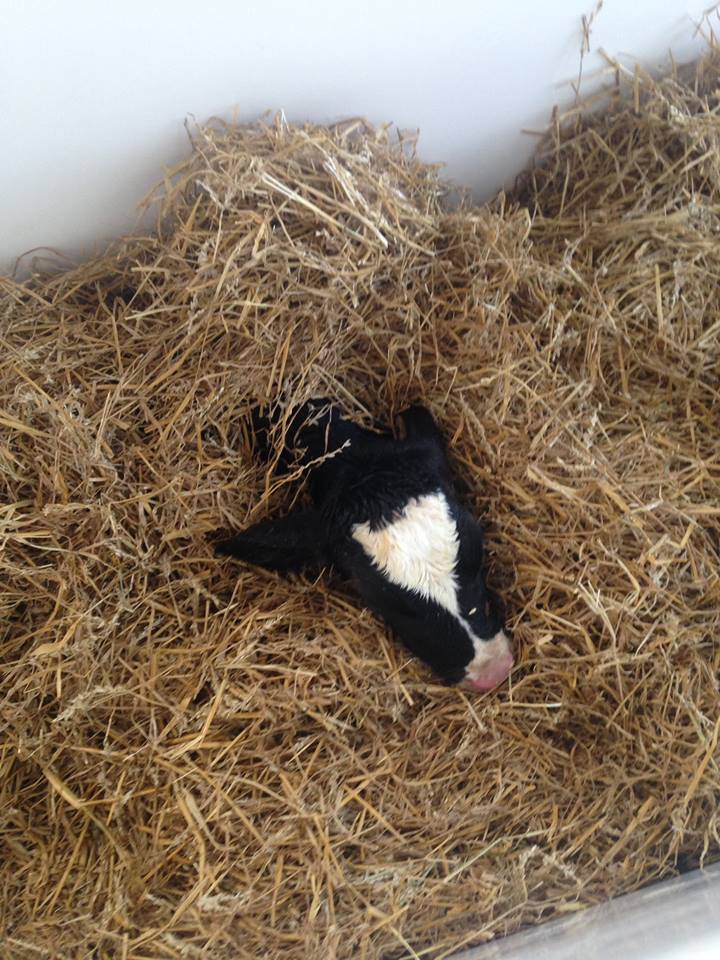
- Provide lots of straw bedding – straw provides the best insulation to calves. Make sure straw is at least eight cm deep, and DRY. Kneel in the straw for 20 seconds – if your knees get wet, replace or add more bedding. There should be enough bedding that you cannot see the calf’s legs when it is lying down.
- Provide fresh calf starter daily, and give calves as much as they will eat. This is a secondary energy source that can help calves keep warm.
- Water consumption will encourage starter intake. Aim to provide calves with free choice water at all times – snow or ice is not an acceptable water source. If water freezes, feed warm water after each milk feeding.
- Keep facilities warm – calves can maintain their body temperature quite well when kept dry and draft-free.
- Housing must be a couple of degrees warmer than the outside environment to facilitate ventilation. This principal is the same for hutches; the air inside must be warmer to rise and mix with the outside air.
- Ensure there is still air flow during cold weather – never shut off ventilation systems or close all sources of air flow.
- Calf jackets do an excellent job of keeping young calves warm. Jackets are recommended for all calves under three weeks of age. However, be careful in fluctuating temperatures; look for calves that may be sweating underneath the jacket, as this can cause them to develop chills in if temperatures drop. Be sure to adjust the fit of the jackets weekly and look under the jackets at least once a day to check the calf’s body condition and ensure there are no injuries or illnesses hidden by the jacket.
If you are noticing a lack of growth and increased disease rates in colder weather, consider whether your calves need help keeping warm. Simple management changes can greatly impact whether your calves use all their energy to keep warm or to grow into productive members of the herd.