Healthy Calf Conference
Follow to stay up-to-date on all Healthy Calf Conference updates. Speaker announcements, sponsorship information, registration announcements, and more.
Umbilical health is a critical yet often overlooked aspect of calf management. Proper care of the umbilical cord significantly impacts a calf’s long-term health and productivity. Umbilical infections affect 19 to 27 per cent of calves, leading to complications such as hernias, joint infections, and poor growth.
At birth, the rupture of the umbilical cord creates an entry point for bacteria. Several factors increase the risk of infection:
Early detection is key to effective treatment. Producers should watch for:
Studies suggest many infections go undiagnosed, reinforcing the need for routine monitoring.
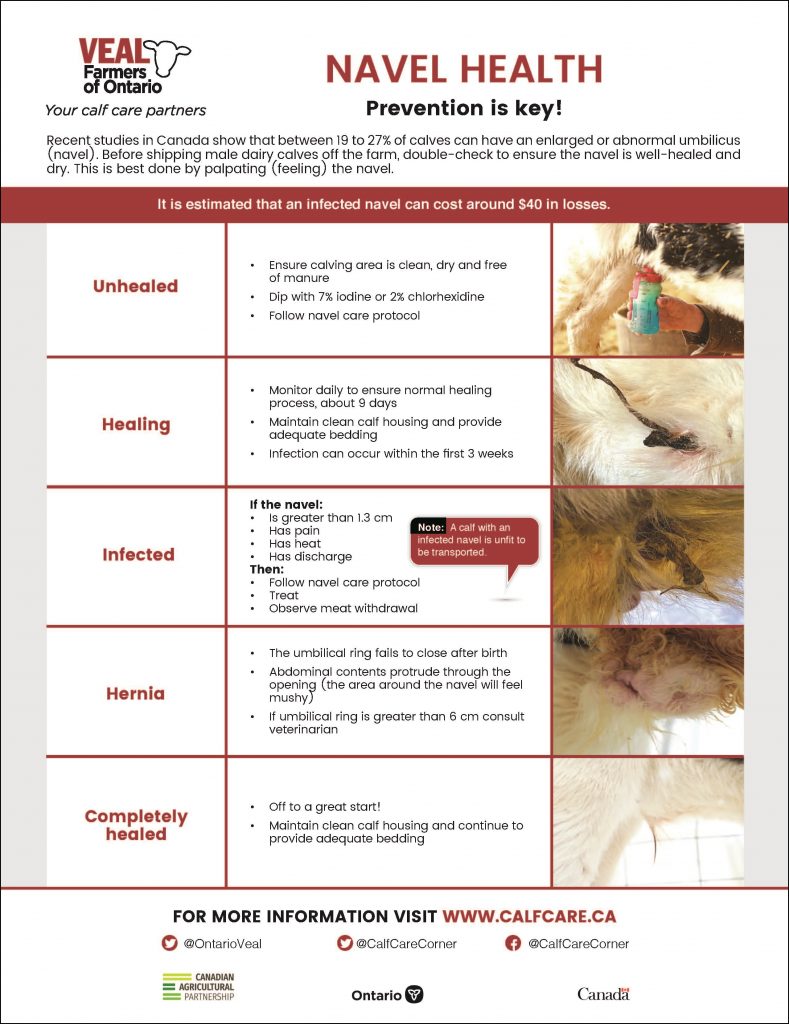
Navel scoring helps producers identify problems before they worsen. This system evaluates size, heat, pain, and discharge, assigning a severity score from 0 to 3. A score of 0 indicates a healthy navel, while higher scores signal infection risks. By integrating navel scoring into calf health assessments, producers can detect infections sooner and act quickly.
Download the “Navel health” resource here.
A clean, dry environment is critical to reducing bacterial exposure. Producers should:
Routine navel scoring allows for early intervention when infection signs appear. Combining hygiene with proactive monitoring leads to stronger, healthier calves.
Effective care extends beyond navel disinfection. A holistic approach includes:
Ignoring umbilical health can be costly. Treatment expenses, including labour and medication, add up quickly, especially in today’s competitive market. Additionally, affected calves experience slower growth rates and increased mortality, reducing overall productivity.
Umbilical health requires active management from birth. By maintaining clean environments, monitoring calves for signs of infection, utilizing navel scoring, and adopting holistic care strategies, producers can significantly improve calf welfare and performance.
Follow to stay up-to-date on all Healthy Calf Conference updates. Speaker announcements, sponsorship information, registration announcements, and more.
The Codes of Practice are nationally developed guidelines for the care and handling of farm animals. They serve as our national understanding of animal care requirements and recommended practices.